
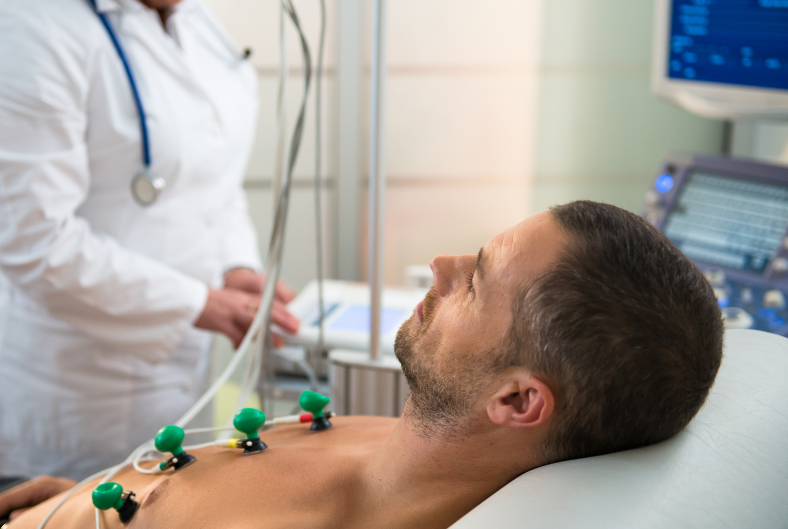
You might have heard the term before and wondered, “What is an EKG?“ An EKG, short for electrocardiogram, is a simple and quick test that checks how your heart is working. Doctors use it to look at your heartbeat and find problems that might be hidden.
An EKG shows if your heart is beating too fast, too slow, or unevenly. It helps spot early signs of heart trouble before things get worse.
When Your Chest Feels Strange: Symptoms That Require an EKG
Not every chest pain is serious, but some signs should never be ignored. Here are some symptoms that require an EKG:
- Chest pain or tightness
- Feeling dizzy or lightheaded
- Fast, slow, or irregular heartbeat
- Shortness of breath without reason
- Weakness or tiredness that feels unusual
If you feel any of these, your doctor might suggest an EKG for chest pain, EKG for arrhythmia, or even an EKG test for heart attack based on what you describe.
Understanding the Process: EKG Test Explained Simply
Let’s get the EKG test explained in an easy way:
- Sticky patches (called electrodes) are placed on your chest, arms, and legs
- These patches are connected to wires that go into a machine
- The machine records your heart’s signals as lines on a screen or paper
- You lie still for just a few minutes while it records
- It’s safe, quick, and gives important information about your heart
Wondering “Is an EKG painful?” The answer is no. It doesn’t hurt at all. You might feel the patches being pulled off afterward, but that’s it.
Also Read: Impact Of Reducing Sugar in Diet for Better Heart Health
What an EKG Can Reveal Without Saying a Word
What does an EKG show? A lot more than you think. It can detect things silently happening inside your chest.
- Irregular heartbeat (arrhythmia)
- Signs of a past or current heart attack
- Poor blood flow to the heart
- Enlarged heart chambers
- Heart rhythm problems
Doctors often use an EKG for heart issues when they need fast and clear information.
The Fear Behind the Lines: What Does an Abnormal EKG Mean?
Hearing the words “abnormal EKG” can be scary. So what does an abnormal EKG mean? It simply shows that your heart’s pattern is different from normal. That doesn’t always mean something is seriously wrong.
Reasons for an abnormal EKG may include:
- Stress or anxiety
- Low potassium or other mineral changes
- Medication effects
- A heart condition needing treatment
- Past heart attack damage
Your doctor will explain more after checking your full health picture.
When the Heart Misbehaves: EKG for Arrhythmia and Chest Pain
Doctors use EKG for arrhythmia when your heartbeat feels off. It helps find if the rhythm is too fast (tachycardia), too slow (bradycardia), or just irregular.
For sudden discomfort in the chest, doctors quickly perform an EKG for chest pain to rule out serious problems like a heart attack. If caught early, it can save lives.
Emergency Moments: EKG Test for Heart Attack Detection
Heart attacks can be deadly if not treated on time. That’s why an EKG test for heart attack is one of the first tests done in emergencies. It helps doctors see if your heart is in trouble so they can act fast.
Choosing the Right Type: Types of EKG Tests You Might Need
There are different types of EKG tests based on your situation:
- Resting EKG: Done while you lie down
- Stress EKG: Done while walking on a treadmill
- Holter Monitor: A device worn for 24-48 hours
- Event Monitor: Worn for longer periods to catch rare symptoms
- Telemetry: Continuous monitoring in hospitals
Each type helps doctors in different ways.
Also Read: Don’t Ignore These 10 Silent Signs of Heart Trouble
Not Just Letters: EKG vs. ECG Confusion Ends Here
Let’s clear this up. EKG vs. ECG means the same test. ECG stands for electrocardiogram too, but the term EKG comes from the German spelling. So, don’t worry if you hear both. They’re used interchangeably by doctors.
Understanding the Science: How Does an EKG Work?
How does an EKG work? It checks your heart’s electrical signals. Your heart creates small electrical pulses to make it beat. The EKG machine records those pulses to show if they’re normal or not.
A word from the Doctor —
Here’s what usually happens during an EKG procedure:
- You lie on a bed or table
- A technician places sticky electrodes on your skin
- These are connected to a machine
- You breathe normally and stay still
- The machine prints out the results
It usually takes less than 10 minutes. Quick, safe, and helpful.
FAQs
- What is an EKG?
An EKG is a test that checks your heart’s rhythm and signals. - Is an EKG painful?
No, an EKG is painless and only takes a few minutes. - What does an abnormal EKG mean?
It means your heart pattern is different, not always serious. - Can an EKG detect a heart attack?
Yes, it helps doctors see signs of a heart attack quickly. - What does an EKG show?
It shows how fast or slow your heart beats and if it beats regularly.